lunes, 29 de febrero de 2016
martes, 23 de febrero de 2016
viernes, 19 de febrero de 2016
Sports, games and hobbies
Do the following exercises:
Exercise 1: Hobbies
Exercise 2: Match a picture and a word
Exercise 3: Olympic Sports
Exercise 4: Memory match
Exercise 5: Sports Vocabulary
Exercise 6: Play - Do - Go
Exercise 7: Play - Do - Go
Exercise 8: Play - Do - Go
Exercise 9: Sports Picture Quiz
Exercise 10: Hobbies
Exercise 11: Sports Quiz
miércoles, 17 de febrero de 2016
Formation Of Adjectives in English
Forming adjectives
Typical adjective endings
Some adjectives can be identified by their endings. Typical adjective endings include:
- -able/-ible understandable, capable, readable, incredible
- -al mathematical, functional, influential, chemical
- -ful beautiful, bashful, helpful, harmful
- -ic artistic, manic, rustic, terrific
- -ive submissive, intuitive, inventive, attractive
- -less sleeveless, hopeless, groundless, restless
- -ous gorgeous, dangerous, adventurous, fabulous
Sometimes when adding these endings changes have to be made. Here are some rules for forming adjectives and their exceptions:
| Add | Exceptions | Word | Adjective |
| -al | If ending with an ‘e‘, drop it | Nature Function | Natural Functional |
| -y | If ending with an ‘e‘, drop it | Ice Oil | Icy Oily |
| -ful | If ending with a ‘y‘, replace with an ‘i‘ | Beauty Peace | Beautiful Peaceful |
| -ous/-ious | If ending with a ‘y‘, drop it | Mystery Danger | Mysterious Dangerous |
| -ic | If ending with a ‘y‘, drop it | History Rust | Historic Rustic |
Forming adjectives from nouns and verbs
Adjectives can be formed from different words. They can be formed from nouns:
| Noun | Adjective |
| accident | accidental |
| danger | dangerous |
| length | long |
| star | starry |
| wind | windy |
| Verb | Adjective |
| enjoy | enjoyable |
| help | helpful |
| obey | obedient |
| play | playful |
| talk | talkative |
Or even from other adjectives:
| Adjective | Adjective |
| comic | comical |
| correct | corrective |
| elder | elderly |
| red | reddish |
| sick | sickly |
lunes, 15 de febrero de 2016
Choose two pictures from the ones given below
2. Compare them
3. Do you like them? Why? Why not?
POP ART
Drowning Girl (Roy Lichtenstein)
ABSTRACT
No. 5, 1948 (Jackson Pollock)
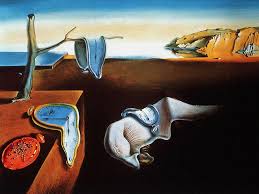
SURREALISM
The Persistence of Memory (Salvador Dali)
EXPRESSIONISM
The Scream (Edvard Munch)
CUBISM
Three Musicians (Pablo Picasso)
SYMBOLISM
The Kiss (Gustav Klimt)
POST-IMPRESSIONISM
Starry Night (Vincent van Gogh)
IMPRESSIONISM
Dance at Le moulin de la Galette (Pierre-Auguste Renoir)
REALISM
The Gleaners (Jean-Francois Millet)
ROMANTICISM
The Third of May 1808 (Francisco Goya)
BAROQUE
Las Meninas (Diego Velazquez)
RENAISSANCE
The Mona Lisa (Leonardo da Vinci)
MEDIEVAL
Words used to describe works of art or crafts
Words for Art
viernes, 12 de febrero de 2016
Food, Food, Food....
Click on the links below for some practice:
A / AN, SOME, ANY
COUNTABLE OR UNCOUNTABLE?
Thanks to Montse Morales for her fantastic website
miércoles, 10 de febrero de 2016
Suscribirse a:
Entradas (Atom)
-
Example Business Telephone Conversation Ms Anderson (sales representative Jewels and Things): ring ring ... ring ring ... ring ring ... Sec...
-
SUMMARY : Vocabulary Topic: Words from the text (good-natured, sign, degree, etc.) Topic: Noun & Adjective suffixes (-ment, -tion, -ful,...
-
En inglés es frecuente terminar las frases con otra frase corta, de signo contrario, la cual tiene la intención de pedir la opinión o buscar...